

Headline
Tier1
The UAM Ecosystem
The Urban Air Mobility (UAM) ecosystem is divided into four main operational sectors: Air Vehicles (eVTOL), Ground Infrastructure (Airports and Vertiports), Air Traffic Management, and Operations & Services. Each sector includes specific technologies, regulations, and players necessary to ensure safe, efficient, and sustainable urban flights.

1. Air Vehicles & OEMs
Discover the innovators designing and building the next generation of electric vertical take-off and landing (eVTOL) aircraft.

2. Infrastructures Sector
Essential infrastructures supporting UAM operations, including traditional airports and new vertiport designs for urban air travel.

3. Air Traffic Managment
Understand the companies providing critical flight operations, air traffic management, and pilot services for UAM vehicles.

4. Operations & Services Sector (End-Users)
Organizations managing ground handling, maintenance, charging infrastructure, and passenger logistics for UAM.
1. Air Vehicles & OEMs
Discover the pioneering companies and organizations driving innovation in Urban Air Mobility.
The shaping of this sector requires OEMs to devloping a new breed of flying veichles which are known as eVTOL.
- eVTOL Aircraft Manufacturers: Electric vertical takeoff and landing aircraft for passenger is an emerging market which soon will integrate the existing Air Transport System.
- New comers: Among the seasoned producers of traditional aircrafts, a miriad of new manufacturers are entering the market.
- Innovation is the Key: Production of electric motors, advanced rotors, and high-energy-density battery packs, is already pushing the innovation and Greening of Aviation Industry.
The UAM ecosystem operates through localized strategies across the European Union (EASA jurisdiction), the United States (FAA jurisdiction), and China (CAAC jurisdiction). While Europe prioritizes cross-border safety frameworks, the US leverages major airline partnerships, and China leads in rapid, fully autonomous deployment.

Air Vehicles (eVTOL OEMs & Drone Manufacturers)
Explore the companies designing and producing advanced eVTOL aircraft, pushing the boundaries of aerial transportation for urban environments.
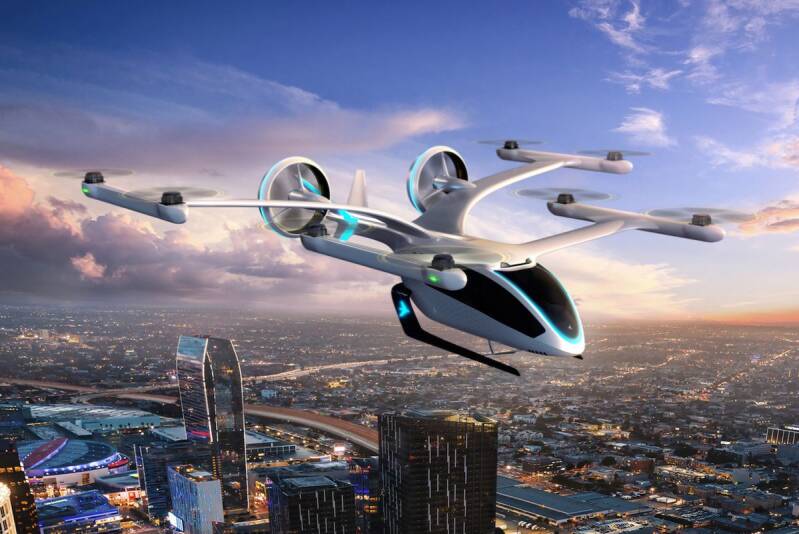
Passenger eVTOLs must feature extreme engineering safeguards. Since they carry human life, they include multi-layered backup systems for batteries, motors, and flight controllers. They are built to satisfy strict global aviation bodies like the FAA or EASA. Goods drones, while safe, face fewer structural mandates because an in-flight malfunction results in lost property rather than human casualties
The differentiation between a passenger eVTOL (Electric Vertical Takeoff and Landing) aircraft and a goods/cargo drone lies in their core purpose, risk profile, and regulatory certification requirements. While both share the capability of vertical flight and electric propulsion, passenger eVTOLs are engineered to transport humans as "flying taxis," whereas goods drones are built to automate logistics and move physical products
European Union OEMs:
AltoVolo (UK). AltoVolo is developing a number of key technologies for performance optimised vertical flight and in particular AltoVolo is developing "Sigma" a HyperTOL or in other terms a personal e-VTOL destined to become a game changer in the emerging UAM.
Airbus Helicopters (Netherlands/France). Building the CityAirbus NextGen under strict EASA Special Condition VTOL safety guidelines
Volocopter (Germany). Pioneering multicopter frameworks optimized for short inner-city shuttle loops.
Vertical Aerospace (UK). Vertical Aerospace is a UK-based aerospace company developing zero-emission electric vertical take-off and landing aircraft.
Ascendance Flight Technologies (FR). Ascendance Flight Technologies is a French aerospace company developing the ATEA, a hybrid-electric VTOL aircraft with a 400km range designed for sustainable regional air mobility.
Manta Aircraft (IT). The Italian high-tech company, based in Sesto Calende, actively continues the development and design of its hybrid-electric vertical and short takeoff and landing (HeV/STOL) aircraft family. ANN6 Development: The engineering team has focused on finalizing the propulsion system of the ANN6 (a six-seat aircraft). The system combines electric ducted fan motors with a turbine powered by Sustainable Aviation Fuel (SAF).
Eflyke is an innovative company based in Govone (Cuneo), specializing in the development of "Made in Italy" eVTOL (electric Vertical Take-Off and Landing) aircraft designed for private and recreational aerial mobility. The company stands out in the Urban Air Mobility (UAM) landscape by blending refined Italian design, 100% electric sustainability, and high structural robustness.
United States OEMs:
Joby Aviation: Spearheading the FAA's commercial piloted certification path with aircraft manufacturing backed by Toyota.
Archer Aviation: Manufacturing the Midnight aircraft with assembly lines funded by Stellantis.
BETA Technologies: Producing both CTOL (conventional) and eVTOL configurations for cargo and defense.
EVE Air Mobility: An Embraer company, EVE Air Mobility completed successfully first flight of its full-scale eVTOL prototype in late 2025.
Wisk Aero: Wisk Aero, a Boeing company, is developing the first autonomous, all-electric, passenger-carrying air taxi in the United States.
LIFT Aircraft. LIFT Aircraft is developing a three-tier product strategy for personal eVTOL flight: an ultralight Hexa for recreational use, a Light Sport Aircraft version, and the Hexa-C (Certified Edition) pursuing full FAA Type Certification initiated in early 2026
Pivotal: Pivotal (formerly Hexa) offers the Helix, a single-seat personal eVTOL classified as an ultralight aircraft requiring no pilot license to fly. Backed by Google co-founder Larry Page, the Helix features 18 independent rotors and a ballistic parachute system for safety. Pivotal is making personal flight accessible by offering purchase and flight experience programs from its Austin, TX headquarters
Japan OEMs:
SkyDrive.SkyDrive is a Japanese eVTOL manufacturer conducting demonstration flights of its SD-05 aircraft in Tokyo (Feb 24-28, 2026) at Tokyo Big Sight, marking Tokyo's first eVTOL demo. SkyDrive is targeting commercial launch by 2028 as part of Tokyo Metropolitan Government's eVTOL Implementation Project.
China OEMs:
EHang: The global leader in uncrewed aviation, holding CAAC type, production, and airworthiness certificates for its autonomous EH216-S passenger aircraft.
ARIDGE (XPeng AeroHT). Moving toward mass production of modular, dual-mode flying cars.
AutoFlight: Rapidly progressing through the CAAC airworthiness compliance rosters for heavy cargo and passenger platforms
Volant: Aero Technology (Volant Aerotech). Specialized in high-efficiency passenger aircraft for regional mobility. Its VE25-100 Skyler model (configured for 1 pilot and 5 passengers) has successfully passed crewed flight tests.
Aerofugia (Geely Group). A subsidiary of the automotive giant Geely (owner of Volvo). It develops the TF-2 series, a tilt-wing eVTOL designed for intercity passenger transport and aerial tourism.
YIVTOL (Yingwu Intelligent Technology). An emerging company with a research base in Shenzhen, focused on multi-role aircraft using proprietary multi-channel configuration technologies.
INFLYNC: Inflync is a Shanghai-based eVTOL startup founded in October 2023 that achieved an unprecedented development pace — conducting the first untethered hover flight of its full-scale L600 ducted-fan eVTOL demonstrator on February 16, 2026, reaching full-scale flight in under 2.5 years from founding.
INFLYNC L600 adopts the world-leading hybrid tilt-wing ducted fan configuration, enabling long-range, high-speed flight to cross mountains and oceans, and achieving safe, low-noise operations for blending into cities and communities.
2. Ground Infrastructure Sector
The physical and technological base on the ground for managing flows and vehicles:
-
Vertistops: Dedicated urban airport nodes for vertical takeoff and landing.
-
Charging Systems: High-power stations for fast battery charging or energy module swapping.
-
Maintenance and MRO: Specialized centers for diagnostics and repair of urban electric and electronic systems.
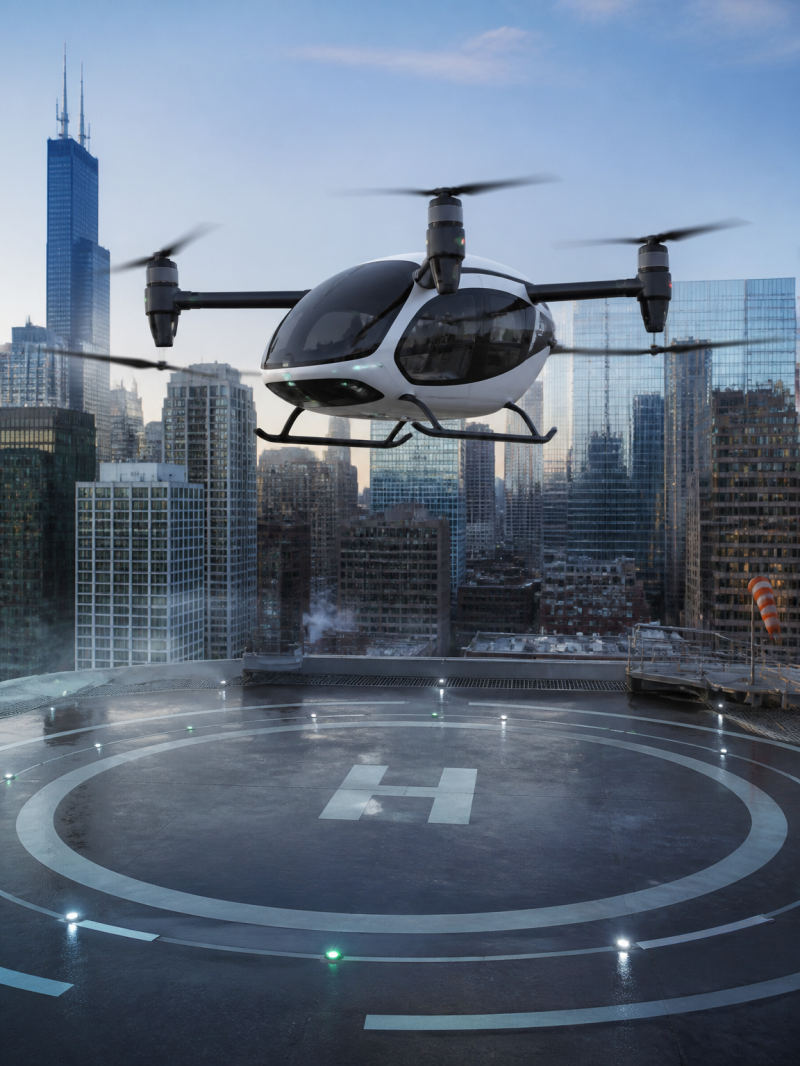
Vertistops: Dedicated urban airport nodes for vertical takeoff and landing. The differentiation of vertiports is determined by scale, operational capacity, infrastructure complexity, and location.
The Infrastructure Hierarchy: The industry separates these ground facilities into three distinct tiers based on their purpose and service level:
- Vertiport: A multi-pad hub designed for high-density operations. It contains terminal passenger facilities, secure boarding gates, and fast-charging infrastructure.
- Vertistop: A baseline node meant solely for picking up and dropping off passengers or cargo. It does not feature permanent aircraft storage, maintenance facilities, or heavy charging infrastructure.
- Vertipad: The smallest footprint. It features a single landing pad with no passenger amenities or technical support. It is intended for quick, on-demand drop-offs.
Infrastructure developers
Learn about the innovators creating the essential ground infrastructure, including vertiports, charging stations, and maintenance facilities, for UAM operations.

Building a functional Urban Air Mobility (UAM) ecosystem requires a highly advanced network of ground infrastructures and megawatt-level charging stations. Ground charging systems must handle immense power spikes without collapsing the local electrical grid.
This infrastructure is no longer just theoretical. In July 2026, Dubai opened the world's first purpose-built commercial eVTOL vertiport (developed by Skyports Infrastructure and the RTA). The 33,400-square-foot facility features dedicated aircraft stands integrated with Joby's high-power charging systems, serving as the blueprint for heavy-duty grid buffering and automated passenger workflows.
EU - Ground Infrastructures (Vertiports & Charging:
UrbanV (Italy). Backed by Aeroporti di Roma, building vertiport networks across the Mediterranean.
Groupe ADP (France). Developing permanent flight nodes integrated into Parisian commercial airports.
Skyports Infrastructure (UK/Europe): Managing European testbeds and global infrastructure programs. Skyports Infrastructure is building the world's first purpose-built commercial vertiport (DXV) in Dubai Marina, which reached the topping-out construction milestone in November 2025 and is 60% complete. DXV will support 42,000 aircraft movements and 170,000 passengers per year when it opens Q1 2026. Skyports is developing 4 vertiport locations across Dubai as infrastructure partner for Joby Aviation's exclusive air taxi service. Global operations spanning the UK, UAE, US, and Asia Pacific
Ferrovial Vertiports (Spain). Ferrovial Vertiports, a division of global infrastructure giant Ferrovial, is developing vertiport networks across the UK, US, and Spain. The company has strategic partnerships with Lilium and Archer Aviation to build and operate landing infrastructure for eVTOL aircraft. Ferrovial brings decades of experience in airports, toll roads, and construction to the emerging advanced air mobility ecosystem.
Urban-Air Port (UK) develops sustainable ground infrastructure for advanced air mobility. Their modular vertiports can be deployed rapidly to support eVTOL operations in cities worldwide.
United States:
Ferrovial Vertiports: Planning key multi-modal transportation hubs across Florida and the US sunbelt.
BETA Technologies: Deploying a proprietary, nationwide multimodal charging network (Charge Cube) to support logistics and air taxis.
Urban-Air Port: Partnering locally to provide scalable, small-footprint modular designs for dense US cities
Volatus Infrastructure designs and develops vertiport solutions for the US market, featuring their proprietary ATLAS vertiport system. The company coordinates closely with the FAA on vertiport standards and certification requirements. Volatus provides end-to-end infrastructure consulting from site selection to operational readiness for eVTOL operators.
China:
Local Municipalities (Shenzhen, Guangzhou, Hefei): Governed by state-backed entities building vast localized infrastructure, targeting hundreds of low-altitude nodes.
EHang Infrastructure Division: Designing and deploying automated vertiports specialized for uncrewed passenger drones.
Australia:
Skyportz is an Australian company developing a network of rooftop vertiport locations for urban air mobility. With 200+ sites identified across major Australian cities, Skyportz focuses on integrating eVTOL landing infrastructure into existing building rooftops. The company works with property owners and city planners to prepare Australia for commercial air taxi services.
Sector
Tier 2
3. Air Traffic Managment
Air Traffic Management & U-Space Sector
The software and protocols to safely regulate low-altitude traffic.
- U-Space Service Providers: Digital platforms for automated flight plan management and obstacle detection.
- Communication and Navigation Systems: 5G networks, satellite communications, and ultra-high-precision geolocation.
- Cybersecurity: Protected digital infrastructures against cyber attacks on remote or autonomous guidance systems.

Air traffic management
Identify the firms developing sophisticated systems for safe and efficient air traffic control, integrating UAM vehicles into existing airspace.
The deployment of Urban Air Mobility (UAM) depends on merging traditional Air Traffic Management (ATM) with highly automated, digital systems. Because low-altitude urban airspace will host high-density fleets of eVTOL aircraft, traditional air traffic controllers cannot manage every flight manually.
A variety of international aviation organizations, national air navigation service providers (ANSPs), and dedicated research partnerships are designing the framework for Urban Air Traffic Management (UATM).

Urban Air Mobility (UAM) demands a fundamental shift away from traditional Air Traffic Management (ATM). Traditional ATM relies on human air traffic controllers (ATCOs) managing a relatively low volume of highly regulated, high-altitude aircraft. In contrast, UAM introduces dense, highly automated fleets of electric vertical takeoff and landing (eVTOL) aircraft operating at low altitudes within complex urban landscapes.
European Union:
Air traffic management units form large-scale research alliances to simulate and standardize UAM networks:
- SESAR 3 Joint Undertaking: The technological pillar of the EU's Single European Sky initiative. SESAR coordinates U-space, the specific digital infrastructure required to manage vast numbers of drones and air taxis simultaneously.
- The ENSURE & AURA Projects: Led by tech consortia including aviation giant Indra, these initiatives unite ANSPs, Airbus, and EUROCONTROL. Their goal is to build dynamic airspace reconfiguration tools and standard communication protocols between traditional ATM towers and automated traffic networks.
- CORUS-XUAM: A large-scale European demonstration project validating integrated ATM/U-space services specifically for passenger transport, vertiport procedures, and emergency response flights.
EUROCONTROL: Serving Europe, EUROCONTROL acts as a central hub for defining the "collaborative ATM-U-space environment." It ensures that future uncrewed or automated low-altitude traffic coexists safely with traditional commercial aviation.
ANRA Technologies: Holds the historic distinction of being the first officially certified U-Space Service Provider (USSP) under EASA regulations.
Droniq (Germany): A joint venture with DFS (German Air Traffic Control) automating low-altitude flight approvals.
SITA / Frequentis: Digital infrastructure giants integrating drone traffic data with mainstream European airport ATC networks.
JARUS (Joint Authorities for Rulemaking on Unmanned Systems). A global group of civil aviation authorities working with EUROCONTROL to harmonize international technical, safety, and operational recommendations for eVTOL traffic.
United States:
Federal Aviation Administration (FAA): In the United States, the FAA manages UAM development via its FAA UAM Concept of Operations (ConOps). It is standardizing structured flight "corridors" and the digital architecture known as Extensible Traffic Management (xTM).
Aloft & AirMap: Industry standard platforms powering the FAA’s LAANC network for instantaneous flight authorization.
Skeyes / OneSky: Engineering complex software to handle predictive routing and avoid high-density city micro-weather obstacles.
China:
CAAC Digital Systems: State-managed air traffic systems coordinating cloud-based tracking directly through regional authorities.
Civil Aviation Data Networks: Highly centralized software frameworks integrating smart city tracking sensors across test hubs like Shenzhen and Guangzhou.
Traditional ATM relies on a single national authority. UAM establishes a federated system where competing, third-party software companies—called Provider of Services for UAM (PSU) in the US or U-space Service Providers (USSP) in Europe—manage the traffic. These cloud-based services interact dynamically to cross-verify flight paths and prevent collisions without requiring direct human intervention.
4. Operations & Services Sector (End-Users)
The companies providing commercial and public utility services to the end consumer.
- Air Taxi Services: On-demand passenger mobility services for urban and intercity routes.
- Public Services and Emergency: Emergency Medical Services (EMS), environmental monitoring, and public safety support.
- MaaS Integration (Mobility as a Service): Digital apps and platforms combining UAM flights with taxis, trains, and local public transit.

Service and technology providers
Discover companies offering critical services such as fleet management, flight planning, software solutions, and advanced battery technology for the UAM sector.
European Union:
Helity / Luxaviation: Established regional helicopter and private jet charter companies handling eVTOL operational integrations.
Air France-KLM: Collaborating heavily on route mapping for airport-to-city commuter networks.
United States:
United Airlines & Delta Air Lines: Buying aircraft directly from Archer and Joby to operate premium airport shuttle bypass lines.
United Airlines has invested $1B+ in urban air mobility, partnering with Archer Aviation to offer air taxi services connecting airports to city centers. United plans to integrate eVTOL into their network for seamless multimodal travel.
Delta Air Lines has partnered with Joby Aviation to bring electric air taxi service to customers. The partnership aims to offer sustainable, convenient travel options connecting Delta hubs with surrounding metropolitan areas
AAR Corp is a major aerospace MRO (maintenance, repair, and overhaul) services provider expanding its capabilities to support eVTOL aircraft maintenance.
Blade Air Mobility: Scaling passenger bookings via an asset-light digital booking platform for upcoming commercial urban routes.
Bristow Group: Adapting heavy offshore aviation operations into local maintenance and fleet services.
China:
EHang Subsidiaries: Operating early ticketed passenger flight services directly in Guangzhou and Hefei under China's first official eVTOL Air Operator Certificates.
SF Express & JD Logistics: Large commercial logistics corporations operating vast uncrewed fleets for suburban delivery routes.
MaaS Integration (Mobility as a Service) applied to UAM (Urban Air Mobility) represents the ultimate evolution of urban intermodal transportation. The core objective is to allow passengers to plan, book, and pay for an entire journey that combines an eVTOL (electric vertical take-off and landing aircraft) flight with traditional ground transportation, all through a single digital application.
Key Features of Digital MaaS Platforms for UAM: To make this ecosystem work, MaaS apps must integrate several advanced technologies:
- Dynamic Trip Planning: Algorithms that calculate the fastest or cheapest route. If a UAM flight is delayed due to weather, the app instantly recalculates the path, suggesting a train or taxi alternative.
- Single Ticketing: The passenger makes a single payment for three or four different modes of transport. The MaaS platform then distributes the revenue (clearing house) among the various operators (UAM airline, train company, e-scooter provider).
- Schedule Matching: Minimizing wait times at vertiports. The ground taxi must arrive just minutes before the eVTOL take-off.